

close
Choose Your Site
Global
Social Media
Views: 0 Author: Site Editor Publish Time: 2025-05-30 Origin: Site


Understanding the Use and Production of Medical Urine Bags
Urine collection plays a critical role in patient care across hospitals, nursing homes, and home healthcare environments. For patients who cannot urinate naturally due to surgery recovery, chronic illnesses, or mobility challenges, urine bags—used in combination with catheters—offer a sanitary, reliable solution. Understanding how these devices are used and manufactured is essential for both clinical and industrial stakeholders.
Urine bags serve a vital function in the following scenarios:
Postoperative recovery: To monitor urine output and maintain bladder drainage.
Urinary retention: When patients are unable to void urine naturally.
Neurological or chronic conditions: Such as multiple sclerosis or spinal cord injuries that impair bladder control.
Palliative care: For patients who are bedridden or receiving end-of-life care.
Leg bags: Small, discreet, and strapped to the leg for mobile patients.
Bedside bags: Larger capacity units used for non-ambulatory patients.
Night drainage bags: Designed for overnight use with higher volume handling.
Proper technique is critical for safe and effective use:
Hand hygiene: Reduces infection risk.
Sterile preparation: Cleansing the urethral area with antiseptic.
Catheter insertion: A Foley catheter is gently inserted into the bladder.
Balloon inflation: Secures the catheter in place.
Bag connection: A sterile urine bag is attached to collect output.
Drain regularly: Empty the bag when it is about two-thirds full to avoid backflow.
Check for signs of infection: Watch for cloudy urine, odor, or discomfort.
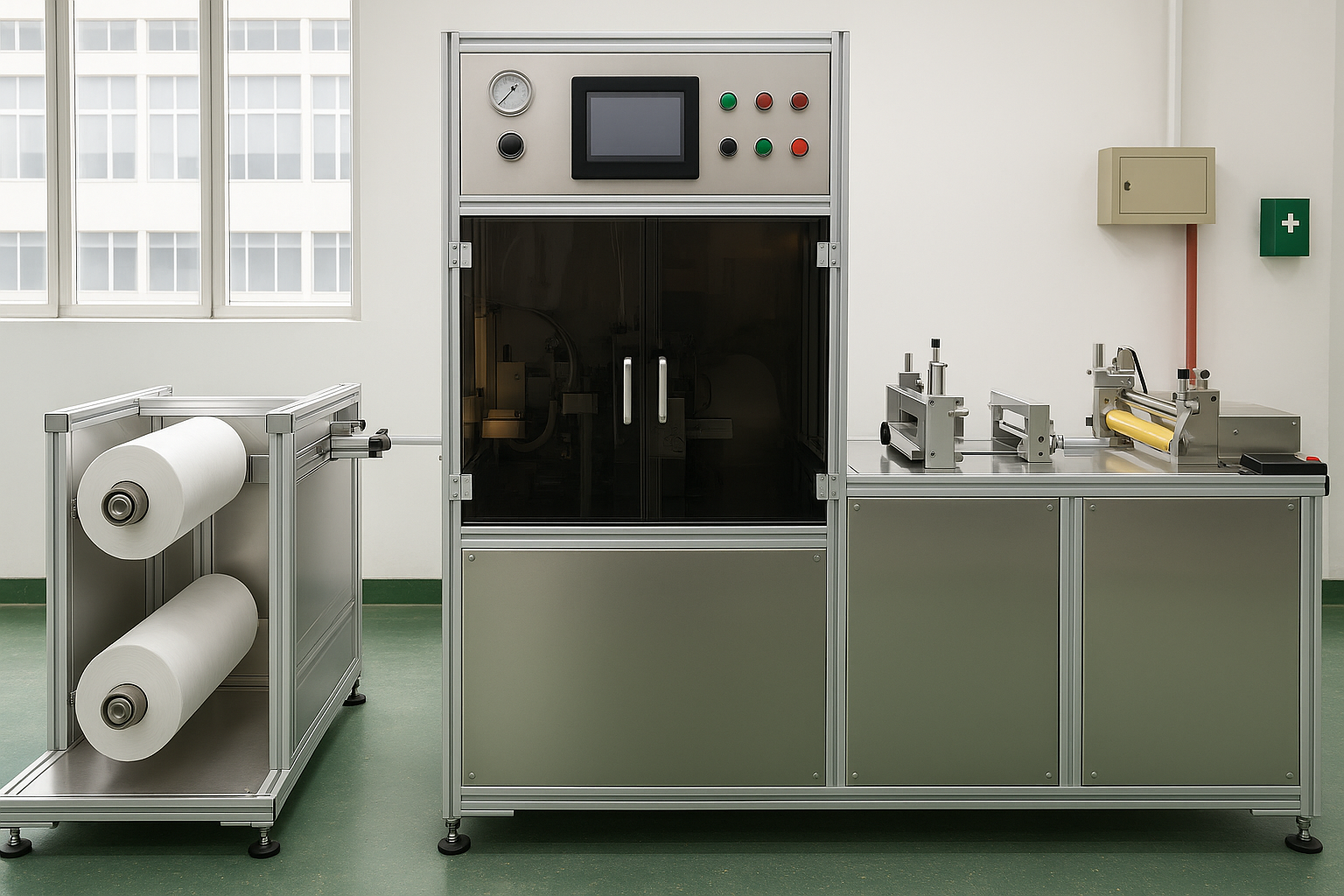
Modern production lines for urine bags use automation and precision to meet medical-grade standards, ensuring both quality and efficiency.
These machines streamline the assembly process:
Precision cutting: Ensures consistency in bag dimensions.
High-frequency welding: Produces strong, leak-resistant seals.
Component assembly: Efficiently connects tubes, valves, and other fittings.
Fully automated systems deliver scalable production:
High output: Thousands of units can be manufactured daily.
Quality control: Maintains uniformity and product reliability.
Labor efficiency: Reduces the need for manual labor.
Manufacturing facilities often incorporate:
Cleanroom environments: To prevent contamination.
Regulatory adherence: Meeting ISO and other international medical standards.
Material quality: Use of biocompatible, durable PVC or similar plastics.
| Production Type | Key Features | Common Uses |
|---|---|---|
| Urine Bag Making Machine | Automated cutting and welding | General urine bag production |
| Automatic Production Line | High-speed, fully automated output | Large-scale manufacturing |
| Medical Urine Bag Production | Cleanroom, regulatory-compliant setup | Hospital-grade applications |
| High-Frequency Welding Line | Durable RF-sealed bags | Leak-proof medical devices |
Q: How often should urine bags be emptied?
A: Typically when two-thirds full—about every 3 to 4 hours for leg bags.
Q: What materials are used in urine bag manufacturing?
A: Medical-grade PVC and other biocompatible plastics for flexibility and durability.
Q: Why is high-frequency welding preferred?
A: It ensures strong, uniform seals without adhesives, improving safety and performance.
Q: Are there regulations for urine bag production?
A: Yes. Regulations ensure the bags meet strict medical safety and performance standards.

Urine bags are essential tools in patient care, supporting hygiene, monitoring, and comfort. Proper usage procedures and regular maintenance help prevent complications like infection. On the industrial side, modern manufacturing technologies—especially automated and high-frequency welding systems—enable efficient, safe, and scalable production. By understanding both use and production, stakeholders can ensure better patient outcomes and product reliability.
