

close
Choose Your Site
Global
Social Media
Views: 0 Author: Site Editor Publish Time: 2026-04-22 Origin: Site


In the manufacturing world, leak detection plays a vital role in ensuring the safety, quality, and reliability of products. Choosing the right leak detection machine is essential to meet your specific production needs. Selecting the wrong machine can lead to inaccurate results, product defects, regulatory non-compliance, and ultimately, significant financial losses. Leak detection machines help identify tiny leaks that could lead to contamination, spoilage, or product failure, which is why they are indispensable in many industries, including medical, food packaging, automotive, and more. This article will guide you through the key factors you need to consider when choosing the right leak detection machine for your product, helping you make a well-informed decision that enhances both your product quality and production efficiency.
The first step in selecting the right leak detection machine is understanding the unique requirements of the product you're testing. Different products have different leak detection needs based on their material, pressure tolerance, and intended use. For example, medical bags, IV bags, and food packaging all require leak detection, but the specific criteria for each product may differ significantly.
· Medical Bags: These bags must be airtight to maintain the sterility of their contents. A leak in a medical bag can compromise patient safety and lead to contamination.
· Food Packaging: Packaging must be airtight to prevent spoilage or contamination. Leak detection ensures that the product maintains its freshness.
· Bottles and Containers: These products need to withstand specific pressure levels to prevent leakage during transport or storage.
One of the most important aspects of choosing a leak detection machine is ensuring it is compatible with the materials your product is made of. Different materials, such as PVC, TPU, EVA, or even glass and metal, may respond differently under vacuum or pressure conditions, which affects how leaks are detected. A machine that works well with one material may not be suitable for another.
Leak detection machines are typically designed to handle specific types of products. For instance, medical bag machines may need to test thin, flexible materials, while bottles and tubes may require a system capable of testing thicker, rigid containers. Always verify that the machine you select is capable of working with the materials you are testing.
Leak detection machines typically use either the vacuum decay or pressure decay method. Understanding the differences between these two techniques is crucial when selecting the right machine for your product.
The vacuum decay method involves creating a vacuum inside the test item. If there is a leak, the vacuum pressure will drop. This method is highly effective for detecting small leaks in sealed containers, such as medical bags or food pouches, as it is sensitive and can detect even the smallest changes in pressure.
In contrast, the pressure decay method applies pressure to the sealed product. If the pressure drops over time, it indicates a leak. This method is commonly used for testing more rigid products, such as bottles, pipes, and automotive components.
The choice between these two methods depends largely on the type of product you are testing and the accuracy required.
The accuracy of a leak detection machine is critical. You need a machine that can detect even the smallest leaks to ensure product quality and safety. For example, a tiny leak in a medical bag or IV bag can lead to contamination, which could be harmful to patients. High sensitivity is required to detect such small leaks without false positives. When choosing a machine, ensure it has sensors that are calibrated to detect leaks at the required sensitivity levels.
Leak detection machines typically have a range of detection sensitivities, often measured in percentage of full scale (FS). A higher FS percentage means that the machine can detect smaller leaks. You should select a machine that offers the appropriate sensitivity for your product’s needs.
In high-volume manufacturing environments, speed is a critical factor. The leak detection machine should be able to handle the required throughput without compromising accuracy. Machines that can test hundreds or even thousands of products per hour are ideal for large-scale production, such as in the food packaging or medical industries.
At the same time, it is important not to sacrifice quality for speed. The leak detection machine should be able to maintain high precision while also achieving the necessary production speed.
Automation is increasingly important in modern manufacturing. Choosing a fully automated leak detection machine can significantly improve efficiency by reducing the need for manual inspections. Additionally, integrating the leak detection system into your existing production line can further streamline the process, allowing for continuous testing of products without interrupting production flow.
Many modern leak detection machines come with automated features such as touch-screen interfaces, real-time monitoring, and automatic reporting. Look for a machine that offers these features for seamless operation.
In industries like healthcare, pharmaceuticals, and food packaging, it is essential to ensure that your leak detection machine complies with industry regulations, such as ISO and GMP standards. Compliance ensures that the equipment meets safety and quality requirements and can help prevent costly product recalls or legal issues down the road.
Make sure that the leak detection machine you choose is certified to meet relevant industry standards and regulations. This is particularly important in sectors where product safety is critical, such as medical and food industries.
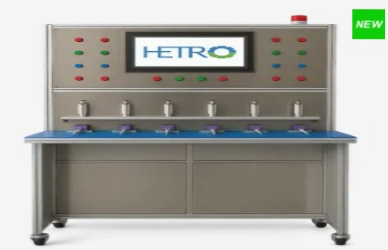
When selecting a leak detection machine, you may encounter multiple models and brands offering different features. To help you make an informed decision, it’s important to compare the features, specifications, and costs of the various machines. Below is a comparison of common leak detection machine features:
Feature | Model A (Vacuum Decay) | Model B (Pressure Decay) | Model C (Automated Leak Detection) |
Detection Method | Vacuum Decay | Pressure Decay | Both |
Testing Speed | 300-400 items per hour | 500-600 items per hour | 500-800 items per hour |
Sensitivity | 0.1% FS | 0.05% FS | 0.1% FS |
Automation | Semi-Automatic | Fully Automated | Fully Automated |
Material Compatibility | Flexible bags, soft containers | Rigid containers, tubes | Flexible and rigid containers |
Compliance | ISO, GMP | ISO, GMP | ISO, GMP |
When comparing models, pay attention to the following factors:
· Detection Speed: The speed at which the machine can perform leak testing will affect your overall production rate.
· Material Compatibility: Ensure that the machine works with the materials your product is made of.
· Automation: Fully automated machines will improve efficiency by reducing the need for human intervention.
· Compliance: Make sure the machine complies with necessary regulations to meet quality standards.
While the initial cost of a leak detection machine can be significant, it’s important to consider the long-term value it provides. A high-quality machine can reduce the risk of defective products, which can save money by preventing recalls, returns, and customer dissatisfaction.
A well-chosen leak detection machine will pay off in the long run by preventing product defects, reducing waste, and enhancing overall production efficiency. By ensuring that products meet quality standards, manufacturers can also avoid costly recalls and maintain customer trust.
Consider the ongoing maintenance costs of the machine. Regular maintenance is crucial to ensuring the longevity of the machine and keeping it functioning optimally. Look for machines that are easy to maintain and come with a reliable warranty and technical support.
Vacuum decay is best suited for flexible products such as medical bags, while pressure decay works well for rigid items like bottles or pipes. Consider your product's material and rigidity when choosing.
Automation enhances efficiency by reducing the need for manual inspection, ensuring consistent results, and speeding up the production process.
Accuracy depends on the product’s requirements. For sensitive items like medical bags, a machine with high sensitivity (e.g., 0.1% FS) is necessary to detect even the smallest leaks.
Yes, many leak detection machines are designed for high-volume production, offering fast testing speeds (up to 800 items per hour) while maintaining high accuracy and reliability.
Choosing the right leak detection machine is a critical decision for any manufacturer, and Suzhou HETRO Automation Equipment Co., Ltd. is well-equipped to guide you through this process. By considering the product’s material compatibility, required sensitivity, detection method, production speed, and automation capabilities, you can select a machine that meets your specific needs. In addition, comparing different models and considering long-term value, rather than just the initial cost, will help ensure that you make an investment that enhances your production process and product safety. Selecting the right leak detection technology, like those offered by HETRO, will not only improve the quality and safety of your products but also enhance your manufacturing efficiency and reduce operational costs. Whether you're testing medical bags, food packaging, or automotive components, choosing the right machine is a vital step in maintaining high-quality production standards.
