

close
Choose Your Site
Global
Social Media
Views: 0 Author: Site Editor Publish Time: 2026-04-27 Origin: Site


Leak detection is a crucial process across various industries, ensuring the safety and integrity of products. From medical devices to food packaging, the ability to identify leaks early can prevent costly defects and maintain compliance with regulatory standards. One of the most reliable and commonly used techniques for leak detection is the pressure decay method. This method is highly effective in industries where precision and product integrity are paramount. In this article, we will delve into how a pressure decay leak detection machine works, its key features, applications, and benefits, and why it's the preferred method in many manufacturing processes.
A pressure decay leak detection machine is a device designed to identify leaks in sealed products by applying pressure and measuring any changes in that pressure. This method is ideal for testing products that need to maintain a specific pressure during their use, such as medical bags, food packaging, and automotive parts. The machine works by sealing the product within a chamber, applying a controlled amount of pressure, and monitoring the pressure levels over time. If a leak exists, the pressure will drop, indicating the presence of a defect.
The pressure decay method is widely used because of its high accuracy, reliability, and versatility. It can detect even the smallest leaks in a wide range of materials, making it essential for quality control in various manufacturing processes.
Pressure decay leak detection works on the principle that any change in the pressure inside a sealed container can indicate a leak. In the pressure decay method, a product is placed inside a testing chamber, where pressure is applied to the product. The machine then monitors the pressure levels over a set period. If the pressure decreases, it indicates that there is a leak somewhere in the product. The size of the pressure drop can determine the size of the leak.
Sealing the Product: The product to be tested (such as a medical bag or a bottle) is placed inside a chamber that is designed to hold it securely.
Applying Pressure: The leak detection machine applies a specific pressure to the product. This is usually done by either introducing air into the chamber or creating a pressurized environment around the product.
Monitoring Pressure: The machine’s sensors continuously monitor the pressure inside the chamber. These sensors are highly sensitive and can detect even the slightest changes in pressure.
Detecting Leaks: If the product has a leak, the pressure inside the chamber will begin to decrease. The machine will record this drop in pressure, signaling that a leak is present.
Leak Identification: Once a pressure drop is detected, the machine can flag the product for further inspection. Some machines may also provide a more detailed analysis, indicating the size of the leak.
The sensors used in pressure decay leak detection machines are crucial for the system’s accuracy. These sensors are designed to measure very small changes in pressure, which is essential for detecting micro-leaks that could otherwise go unnoticed. The high precision of these sensors ensures that even the tiniest leaks are detected, which is especially important in industries like medical device manufacturing, where product integrity is critical.
One of the main advantages of pressure decay leak detection machines is their ability to detect even the smallest leaks. The sensors are highly sensitive and can measure pressure changes as small as 0.1% of full scale (FS). This level of accuracy is essential for industries where product defects, even minor ones, can result in significant consequences.
Modern pressure decay leak detection machines are often fully automated. Automation allows for high-speed testing without the need for manual intervention, making the process faster and more efficient. Automated machines also ensure consistency in testing, reducing the risk of human error.
Pressure decay leak detection machines can perform leak tests at high speeds, making them ideal for large-scale production environments. Depending on the model, these machines can test hundreds or even thousands of products per hour, ensuring that production lines continue to operate smoothly without delays.
Pressure decay machines are highly versatile and can be used to test a wide range of products, from medical bags and bottles to automotive parts and electronic components. Their ability to adapt to various product sizes and materials makes them a valuable tool in many industries.
In the medical industry, leak detection is vital for ensuring the safety and integrity of medical bags, such as IV bags, blood bags, and urine collection bags. These bags must remain sealed to prevent contamination and preserve the sterility of their contents. Pressure decay leak detection machines ensure that these bags are leak-free before they reach healthcare facilities, preventing potential health risks for patients.
Pressure decay testing is also used to test the integrity of medical catheters, which must maintain a sealed environment to function correctly. A leak in a catheter could compromise patient care, making accurate testing critical.
In the food packaging industry, maintaining the integrity of packaging is essential for preserving freshness and preventing contamination. Leak detection machines are used to test packaging, such as vacuum-sealed bags and containers, ensuring that they remain airtight during storage and transport. A small leak in food packaging could lead to spoilage, loss of freshness, or contamination, which could pose health risks to consumers.
In the automotive and aerospace industries, pressure decay leak detection is used to test critical components, such as fuel systems, pressure vessels, and air systems. Leaks in these components can lead to dangerous situations, such as fuel spills or system failures. Pressure decay testing ensures that these parts meet the required safety standards and are free from leaks that could compromise their performance.
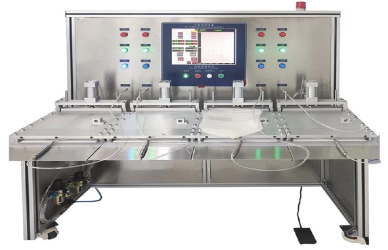
By detecting leaks early in the manufacturing process, pressure decay leak detection machines ensure that products meet safety and quality standards. This is especially important in industries where product integrity is critical, such as medical and food industries. Ensuring that products are free from leaks helps reduce the risk of contamination, spoilage, and product failure.
While the initial cost of a leak detection machine may seem high, it can save manufacturers money in the long run. By preventing defective products from reaching consumers, manufacturers can avoid costly recalls, returns, and customer dissatisfaction. Additionally, pressure decay leak detection machines help reduce waste and increase production efficiency, further lowering operational costs.
Many industries, particularly the medical and food sectors, are required to meet strict regulatory standards such as ISO and GMP. Pressure decay leak detection machines help manufacturers comply with these standards by ensuring that products are free from leaks and defects. This not only helps maintain product safety but also avoids legal issues and potential fines.
Pressure decay leak detection machines are designed for high-speed testing, which makes them ideal for large-scale production environments. Their ability to test large volumes of products quickly helps manufacturers keep production lines moving smoothly, increasing overall efficiency and reducing downtime.
While pressure decay is a highly effective leak detection method, it's essential to understand how it compares to other methods. The table below outlines the key differences between pressure decay, vacuum decay, and bubble testing:
Feature | Pressure Decay | Vacuum Decay | Bubble Testing |
Detection Method | Measures pressure drop | Measures vacuum drop | Uses air bubbles to find leaks |
Suitable Products | Rigid products (bottles, tubes) | Flexible products (bags, pouches) | Used for large, visible leaks |
Accuracy | High precision (0.1% FS) | High precision (0.1% FS) | Lower precision |
Speed | High-speed testing | Moderate speed testing | Slow, manual process |
Compliance | Meets ISO, GMP standards | Meets ISO, GMP standards | Limited compliance |
Automation | Fully automated | Semi-automated or manual | Manual process |
Pressure decay measures the drop in pressure within a sealed product, while vacuum decay measures the drop in vacuum pressure. Both methods offer high precision, but pressure decay is typically used for rigid products, while vacuum decay is better for flexible materials.
The ideal sensitivity for a pressure decay machine is 0.1% FS, which allows for detecting even the smallest leaks. This level of precision is necessary to ensure product integrity in industries such as medical and food packaging.
Yes, modern pressure decay leak detection machines are designed to integrate seamlessly into automated production lines, providing continuous, high-speed leak testing without disrupting the production flow.
Pressure decay leak detection is best suited for rigid products, such as bottles, tubes, and automotive parts, that require a specific pressure to maintain their functionality. It is highly effective for these applications due to its ability to detect even small leaks.
Pressure decay leak detection machines are essential tools in modern manufacturing, and Suzhou HETRO Automation Equipment Co., Ltd. plays a key role in providing these advanced solutions. They offer high-precision testing to ensure product safety, quality, and compliance with industry standards. Whether you're testing medical bags, food packaging, or automotive components, pressure decay testing ensures that your products are free from leaks, reducing the risk of contamination and product failure. Investing in a pressure decay leak detection machine from HETRO can save manufacturers money in the long term by preventing defective products, improving production efficiency, and ensuring compliance with regulatory standards. Whether in the medical, food, or automotive industries, pressure decay leak detection is a critical component in maintaining high-quality production standards.
