

close
Choose Your Site
Global
Social Media
Views: 0 Author: Site Editor Publish Time: 2026-06-26 Origin: Site


Precision in medical device manufacturing goes beyond generic quality metrics. It functions as a rigid prerequisite for patient safety. It secures vital regulatory approvals like FDA clearance and ISO 13485 certification. You cannot afford arbitrary tolerances when human lives remain at stake.
Manufacturers frequently face mounting production pressure on the factory floor. High scrap rates severely erode profit margins. Delayed validation timelines for IQ/OQ/PQ heavily disrupt your time-to-market. Furthermore, inconsistent tube tipping, flaring, or flanging creates massive hidden operational costs.
You cannot fix these structural issues using manual adjustments alone. Achieving scalable consistency relies entirely on the equipment you choose. Mechanical and thermal control capabilities dictate your overall manufacturing success. We will explore how upgrading your forming equipment eliminates common defects. You will learn how to shift operations from reactive sorting to predictable, zero-defect output.
Micro-level deviations in medical tubing compromise device efficacy (e.g., catheter navigation, fluid flow dynamics).
A purpose-built medical tube reforming machine shifts production from reactive quality control to predictable, zero-defect manufacturing.
Evaluating a precision tube forming machine requires assessing thermal stability, repeatability tolerances, and software traceability.
Minor dimensional variances often lead to catastrophic field failures. Guidewire friction presents a common yet dangerous problem in clinical settings. High friction prevents smooth catheter navigation through complex vascular pathways. Weakened stent delivery systems may deploy prematurely. They can also fail to expand correctly inside the patient. Leakages in IV lines compromise precise patient dosing. A micro-tear in a flared tube section can introduce air embolisms. These defects directly threaten patient survival. You must view dimensional accuracy as a clinical necessity. Medical professionals rely on flawless device performance during critical procedures.
Inconsistent inner diameter (ID) or outer diameter (OD) measurements trigger immediate alarms. Quality teams must quarantine entire production batches when deviations occur. This quarantine process heavily complicates your regulatory audits. Regulators demand strict adherence to documented design specifications. They issue warnings if your batch data shows erratic variances. FDA inspectors look closely at your process capability records. Frequent batch quarantines signal a fundamental lack of process control. They force you to initiate tedious Corrective and Preventive Action (CAPA) protocols. Handling these compliance bottlenecks wastes valuable engineering resources.
Imprecise manufacturing drains financial resources quickly. Destructive testing consumes otherwise usable products. Material waste compounds these financial losses daily. High-value medical-grade materials amplify this financial drain significantly. Nitinol, specialized stainless steel, and advanced fluoropolymers cost a premium. Scrapping these expensive materials damages your bottom line directly. You cannot sustain high yield losses in competitive medical markets. Reducing scrap requires addressing the root cause of dimensional instability. You need predictable processes to maximize your material utilization.
Common Medical Tubing Materials and Imprecision Risks | ||
Material Type | Primary Application | Risk of Dimensional Imprecision |
|---|---|---|
Nitinol | Stent delivery, guidewires | High scrap costs, unpredictable thermal shape memory loss. |
PTFE / Fluoropolymers | Catheter linings, lubricious sheaths | Uneven flaring, material splitting during expansion. |
Pebax (Elastomers) | Balloon catheters | Thermal degradation, weakened burst pressure thresholds. |
Stainless Steel | Hypodermic tubes, rigid shafts | Springback distortion, poor mating with hub components. |
Legacy methods rely heavily on operator skill and intuition. Manual forming introduces massive variability across different production shifts. One operator might apply slightly more pressure than another. These microscopic human differences cause major dimensional shifts. Transitioning to a dedicated Medical Tube Reforming Machine eliminates operator-dependent variability entirely. Automated machinery standardizes the application of force and heat. It removes the guesswork from complex flaring and tipping operations. You gain absolute control over the entire forming profile. Standardization ensures the thousandth tube matches the first tube perfectly.
Different materials present highly specific forming challenges. Stainless steel alloys exhibit aggressive springback after mechanical deformation. Advanced machines calculate and over-compensate for this exact springback. Thermoplastic elastomers face rapid thermal degradation under excessive heat. Modern equipment applies strictly controlled thermal profiles to prevent burning. They handle delicate fluoropolymers without causing micro-fractures in the material structure. Understanding these material-specific behaviors prevents unexpected batch failures. Your equipment must adapt to the physical realities of the chosen polymer or metal. Advanced material handling separates superior machines from generic heaters.
Controlled application of heat and mechanical force protects your investments. Aggressive manual forming wears down custom tooling rapidly. Precise, automated movements extend tooling life dramatically. Reduced friction and optimal heating prevent premature die degradation. This preservation translates directly into batch-to-batch uniformity over high-volume runs. Your maintenance team spends less time swapping out damaged tips or molds. Yield improvements become highly predictable when tooling remains intact longer. You maximize output while keeping consumable replacement costs low.
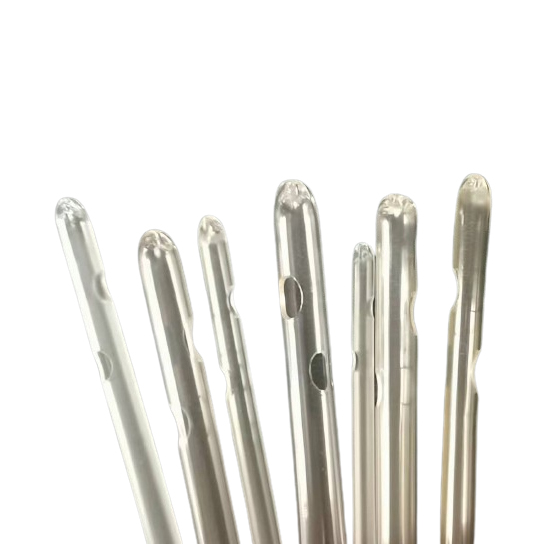
Systems need reliable closed-loop feedback mechanisms to succeed. They must monitor and adjust forming parameters in real-time. Do not trust exaggerated claims of "infinite precision" from vendors. Instead, demand verifiable Cpk (Process Capability Index) metrics. A highly capable Precision Tube Forming Machine delivers stable Cpk metrics above 1.33. Closed-loop systems use integrated sensors to measure displacement and force. They correct minute deviations before the forming cycle completes. This dynamic adjustment prevents out-of-tolerance parts from ever leaving the machine.
Process Capability (Cpk) Chart Summary | ||
Cpk Value | Process Status | Expected Defect Rate (Yield) |
|---|---|---|
< 1.00 | Incapable (High Risk) | High scrap, heavy manual sorting required. |
1.00 - 1.33 | Capable (Marginal) | Acceptable, but vulnerable to slight shifts. |
> 1.33 | Highly Capable (Standard) | Minimal defects, stable volume production. |
> 1.67 | World-Class (Six Sigma) | Virtually zero defects, perfect predictability. |
Heating mechanisms dictate the structural integrity of your medical tubing. Heating must be localized and strictly uniform across the forming zone. Poor thermal control causes unwanted material crystallization. It also causes severe structural weakening during the reforming phase. Advanced thermal profiling allows engineers to program distinct heating zones. You can apply high heat to the tip while keeping the shaft cool. This prevents the overall tube from warping or losing its column strength. Uniform thermal distribution eliminates cold spots that cause uneven flaring.
Software performance matters just as much as mechanical hardware today. Integrated Human-Machine Interfaces (HMI) must log critical production data automatically. The system needs to record exact timestamps for every cycle. It must track any parameter shifts initiated by operators. Logging user actions supports strict FDA 21 CFR Part 11 compliance. Electronic audit trails prove your process remained stable during the run. Traceability protects your company during rigorous regulatory audits. It also accelerates root-cause analysis if a post-market issue arises.
Validating new manufacturing equipment takes significant time and resources. You must prepare for the heavy documentation burden ahead. Facilities cannot simply plug in a machine and start medical production.
Installation Qualification (IQ): You verify the machine arrived correctly. You ensure facility utilities match the equipment requirements perfectly.
Operational Qualification (OQ): You test the machine across its extreme operating ranges. You prove it functions safely under worst-case parameter settings.
Performance Qualification (PQ): You run actual production batches. You verify the equipment produces acceptable parts consistently under normal conditions.
Be transparent with your team about this necessary timeline. Rushing the validation phases inevitably causes compliance failures later. Proper planning prevents factory floor bottlenecks during new equipment integration.
Changing tube profiles often disrupts continuous daily production schedules. Assess the practical realities of switching out your forming dies. High-quality systems feature modular tooling designs specifically built for speed. They reduce machine downtime from several hours to mere minutes. Engineers utilize SMED (Single-Minute Exchange of Die) principles for these designs. Quick-release mechanisms allow operators to swap heating molds effortlessly. Scalability demands fast changeovers between different product SKUs. You cannot afford to lose an entire shift just to reconfigure tooling.
Highly automated systems cost more upfront. However, they drastically lower the necessary skill floor for your operators. Manual configurations require extensive, ongoing training programs. Skilled operators eventually retire or leave the company. This turnover creates massive knowledge gaps on the factory floor. Automation stabilizes long-term throughput seamlessly regardless of operator turnover. The machine remembers the exact recipes and thermal profiles. Operators simply load the raw materials and initiate the validated sequence. This trade-off heavily favors automation for long-term manufacturing stability.
Never buy precision machinery based on marketing specifications alone. You must mandate custom sample runs prior to any procurement decisions. Provide the Original Equipment Manufacturer (OEM) your exact medical tubing. Ask them to run a comprehensive capability study using your materials. Review the micro-tolerances they actually achieve during this test. Inspect the final surface finish of the flared or tipped sections. Proof of capability eliminates assumptions and guarantees actual performance.
Industrial machines will eventually require routine maintenance and troubleshooting. Localized technical support remains absolutely vital for minimizing unplanned downtime. You must investigate the vendor's service response times before buying. Frame your evaluation around the rapid availability of consumable tooling. Ask about remote diagnostics capabilities built into the machine software. Remote access allows vendor engineers to troubleshoot software glitches instantly. Fast support keeps your medical production lines running efficiently.
Evaluate machine data outputs carefully during your shortlisting phase. Check how well the new machine integrates into your current ecosystem. It should connect smoothly to your existing Enterprise Resource Planning (ERP) software. It must also match your Quality Management Systems (QMS) architecture perfectly. Seamless integration eliminates the need for manual data entry by operators. Automated data transfers reduce human transcription errors in your batch records. Connected equipment provides real-time visibility into overall factory floor performance.
Precision in medical tube reforming stands as a non-negotiable compliance standard. It is never just an optional manufacturing preference. Patient safety depends completely on dimensional accuracy and structural integrity. Embracing advanced forming technology eliminates the severe risks of manual variability. It protects your brand from catastrophic field failures and regulatory warnings.
Audit your current scrap rates immediately to identify financial leaks. Gather specific material data and define your strict target tolerance requirements. Reach out to qualified equipment engineers for a formal feasibility assessment today. Upgrading your reforming equipment transforms reactive quality sorting into confident, predictable manufacturing. Take proactive steps to secure your production lines now.
A: Expect tightly controlled tolerances, often within a few microns. However, precise numbers depend heavily on the material durometer and diameter. The raw extruded tube's initial quality also dictates final tolerances. A machine cannot completely fix severely warped incoming extrusions. You should typically expect Cpk values exceeding 1.33 for critical dimensions.
A: Rigid metals like stainless steel require immense mechanical force and compensation for springback. Advanced polymers like PTFE or Pebax demand strict, localized thermal profiling to prevent melting or burning. Some machines specialize entirely in metals. Others offer modular heating technologies designed specifically to handle sensitive thermoplastic elastomers.
A: Validation typically takes several weeks to a few months. The timeline depends heavily on your facility's QMS maturity. Installation Qualification (IQ) takes days. Operational Qualification (OQ) requires extensive boundary testing. Performance Qualification (PQ) demands running full production batches. Proper documentation at each step extends the overall timeframe.
