

close
Choose Your Site
Global
Social Media
Views: 0 Author: Site Editor Publish Time: 2026-06-30 Origin: Site


High-volume medical device manufacturing demands exact geometries for tube ends. Achieving these precise shapes without compromising material integrity is often a critical bottleneck for production facilities. Plant managers face strict regulatory environments requiring absolute consistency across thousands of cycles. Relying on inconsistent manual or semi-manual processes often leads to high scrap rates and frustrating compliance failures. To solve this, facilities need reliable equipment that transitions these delicate operations into scalable, repeatable, and cleanroom-compliant manufacturing.
A dedicated Medical Tube Reforming Machine bridges this gap perfectly. This article details the specific clinical tubes, material profiles, and processing capabilities you should expect from modern systems. You will learn how different polymers react to thermal processing. Finally, we provide a clear framework to help evaluate your next manufacturing investment and optimize your production floor.
Versatile Applications: Reforming machines process a wide spectrum of clinical applications, primarily enteral feeding tubes, vascular catheters, and respiratory airways.
Material Agnostic (with limits): Advanced systems handle everything from standard PVC to complex fluoropolymers, though thermal profiling requirements vary significantly.
Production ROI: The primary value driver is reducing scrap rates and accelerating changeovers while maintaining strict ISO cleanroom and FDA compliance.
Evaluation Focus: Procurement should prioritize validation support (IQ/OQ/PQ), tooling modularity, and thermal control precision rather than just baseline processing speed.
Medical tubes serve drastically different purposes across patient care settings. Each clinical application demands specific geometric tolerances to ensure patient safety and device functionality. You cannot rely on a one-size-fits-all approach when shaping these critical components.
Feeding tubes deliver essential nutrients directly into the gastrointestinal tract. Common variations include Gastrostomy (G-tubes), Jejunostomy (J-tubes), and Nasogastric (NG) tubes. They must navigate delicate mucous membranes without causing irritation.
Processing need: Smooth, atraumatic tip rounding is paramount. Rough edges can easily damage sensitive tissue during insertion. Furthermore, these tubes require precise side-hole punching to ensure unimpeded nutrient flow. If a side hole contains jagged edges or microscopic flash, it can cause clogs or harbor dangerous bacteria.
Intravenous therapy relies on Central Venous Catheters (CVCs) and peripheral IV tubes. Doctors thread these lines through highly sensitive vascular pathways. They stay in the body for extended periods, demanding absolute structural perfection.
Processing need: Cardiovascular catheters require extreme micro-tapering. They must provide seamless guidewire transitions. Any bump or ridge can disrupt the insertion process. The equipment must also maintain strict adherence to internal diameter (ID) tolerances. If the ID shrinks during thermal shaping, it restricts critical fluid dynamics or prevents guidewire passage.
Respiratory care utilizes endotracheal tubes, tracheostomy tubes, and surgical drainage lines. These pathways handle air flow and fluid extraction. They often require integration with external medical equipment, like ventilators or collection bags.
Processing need: Flaring is vital for connector integration. The tube ends must stretch securely over external fittings without tearing. They also require complex beveling and angled tipping to bypass vocal cords smoothly. The angle of the bevel heavily influences how easily a clinician can secure an open airway.
Clinical Application & Processing Needs Summary Chart | ||
Clinical Application | Common Tube Types | Primary Reforming Requirement |
|---|---|---|
Enteral Nutrition | G-tubes, J-tubes, NG tubes | Atraumatic tip rounding, side-hole punching |
Cardiovascular | CVCs, Peripheral IVs | Micro-tapering, strict ID tolerance control |
Respiratory & Drainage | Endotracheal, Tracheostomy | Flaring, complex beveling, angled tipping |
Different materials react uniquely to thermal and Radio Frequency (RF) reforming processes. You must align your machine selection with your primary substrate. Ignoring material science will lead to unacceptable defect rates.
Clinicians highly favor TPU and silicone for long-term implantable or indwelling tubes. They soften slightly at body temperature, maximizing patient comfort. However, they are notoriously difficult to process.
Silicone, in particular, requires highly controlled thermal tipping to avoid material degradation. If you apply excessive heat, the polymer bonds break down. It becomes brittle and loses its essential flexibility. Manufacturers must utilize tightly monitored thermal profiles to shape these materials safely.
Medical-grade PVC remains the industry standard for disposable, cost-effective fluid management lines. It dominates high-volume production for urine bags, blood lines, and standard IVs. Because of its prevalence, optimizing your Medical PVC Tube Machine is a major priority for most facilities.
Processing constraint: PVC poses specific thermal challenges. It is highly sensitive to localized burning or discoloration. If burned, it can release harmful halogenated compounds. The reforming equipment must offer precise, localized heat zones. It also requires reliable, rapid cooling cycles to freeze the polymer matrix before it degrades. Rapid cooling prevents warping and maintains dimensional stability.
Advanced surgical introducers often rely on fluoropolymers like PTFE or FEP. These materials offer incredibly low friction. Catheters and guidewires slide through them effortlessly.
Unfortunately, they boast exceptionally high melting points. Standard conductive heating elements often fail to manipulate them efficiently. Shaping them requires advanced localized heating technologies, such as induction or laser systems. These specialized machines focus intense energy into microscopic zones, melting the polymer precisely without damaging the surrounding tube structure.
Understanding a machine's capabilities requires translating technical features into actual manufacturing outcomes. We need to look beyond the specifications and see exactly how the equipment shapes raw extrusion into a clinical device.
Tip Forming and Tapering: This process creates closed, rounded, bullet, or tapered ends. The machine pushes the raw tube into heated glass or metallic dies. Glass dies often provide a superior, frictionless surface finish. Metallic dies offer high durability for abrasive polymers.
Outcome: The resulting shape drastically reduces insertion friction. It ensures the device meets strict clinical safety standards for patient comfort.
Flaring and Flange Forming: Flaring expands the proximal end of the tube. Operators must attach these tubes to standardized fittings. Expanding the plastic allows for secure mechanical bonding to luer locks, funnels, or Y-connectors. Without precise flaring, the bonded joints might leak under pressure.
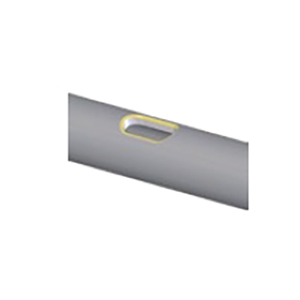
Drilling, Skiving, and Eyelet Punching: Medical devices need entry and exit points for fluids. Automated creation of side ports is critical for feeding and drainage tubes. The machine uses sharp, heated, or rotary tools to cut these eyes.
Quality metric: The process must leave zero flash or particulate residue. Loose plastic flash poses a severe patient risk. It can break off in the bloodstream or digestive tract.
Buying manufacturing equipment is a major capital expense. You need a structured evaluation framework to ensure the hardware aligns with your production goals. Do not rely solely on vendor marketing sheets.
High-speed production means nothing if half the batch fails quality control. You must evaluate the machine’s Process Capability Index (Cpk). A Cpk greater than 1.33 is generally required for medical device manufacturing.
Ask yourself: Does the thermal control system maintain consistent temperatures across thousands of cycles? Minor temperature drifts cause inconsistent tapers. You want a system with closed-loop feedback. It monitors the die temperature in real-time and micro-adjusts the power output to maintain absolute stability.
Medical tubing is manufactured in heavily regulated environments. Your equipment must meet ISO Class 7 or 8 cleanroom standards. A dirty machine will compromise your entire facility.
Look carefully at the machine's pneumatic systems. Pneumatic exhausts must be routed completely away from the sterile field to prevent particulate spray. Furthermore, verify the use of FDA-compliant lubricants and sterile-compatible component housings. Dust-generating belts or exposed greased gears are massive red flags.
Modern manufacturing demands flexibility. Facilities rarely run the exact same product 365 days a year. Assess the turnaround time for die changes.
Can the machine switch from a tiny 5 French cardiovascular catheter to a thick 24 French drainage tube within an acceptable timeframe? High-mix, low-volume runs require rapid changeovers. Look for machines featuring quick-release tooling heads and pre-programmed recipe recall via the touchscreen interface.
Installing new equipment on a medical production floor involves strict regulatory hurdles. You cannot simply plug it in and start molding plastic. We must navigate validation protocols and operator training to guarantee success.
Medical device regulators require documented proof that your equipment works properly. This process involves Installation Qualification (IQ), Operational Qualification (OQ), and Performance Qualification (PQ).
Risk: Equipment that arrives without comprehensive documentation delays production for months. Your quality team will waste hundreds of hours reverse-engineering the validation paperwork.
Mitigation: Shortlist vendors who provide robust, pre-written IQ/OQ/PQ support protocols. They should supply material certificates, wiring diagrams, and software validation documentation upfront.
Heating plastic is only half the battle. Cooling it properly is where most manufacturers fail.
Risk: Inadequate cooling phases can warp the tube after reforming. If you extract the tube from the die while it remains soft, it stretches or bends. This leads to massive batch failures during final inspection.
Mitigation: Ensure the machine features closed-loop thermal monitoring and automated air or water cooling cycles. The die must chill rapidly before the gripper mechanism retracts the finished tube.
Human error is a massive variable on the factory floor. High turnover in manufacturing requires intuitive systems. Assess the UI/UX of the machine's Human-Machine Interface (HMI).
Modern HMIs must lock recipes to prevent unauthorized parameter changes. If an operator manually tweaks the temperature to "speed things up," they compromise the validated process. Look for equipment offering multi-level password protection and compliance with electronic record standards.
Moving from research to procurement requires tactical steps. Do not base your final decision on a polished brochure. You must prove the equipment handles your specific raw materials.
Never purchase based solely on spec sheets. Theoretical cycle times often evaporate when confronted with real-world polymers. Require vendors to process your specific raw tubing using your proprietary dimensions.
Send them a spool of your extruded material. Ask them to film the reforming process and return the formed samples. Inspect these samples under magnification. Check the flash on the skived holes. Measure the ID shrinkage at the taper. This empirical evidence is the only reliable way to validate a machine.
Evaluate the vendor's responsiveness to custom tooling requests. Future medical device designs will inevitably require unique tube geometries. You need a partner, not just a supplier.
Assess their engineering team. Do they have in-house toolmakers? Can they turn around a custom heated die in two weeks, or does it take three months? A vendor with robust domestic support and an agile tooling department will keep your production line running smoothly during new product introductions.
Best Practices vs. Common Mistakes in Equipment Selection | ||
Category | Best Practices | Common Mistakes |
|---|---|---|
Validation | Request full IQ/OQ/PQ templates prior to purchase. | Assuming internal quality teams will handle all documentation easily. |
Testing | Provide proprietary raw tubing for a Proof of Concept run. | Trusting generic cycle time estimates listed on a brochure. |
Automation | Lock operational recipes behind HMI administrator passwords. | Allowing floor operators to tweak thermal profiles manually. |
Investing in reliable processing equipment bridges the gap between raw extrusion and finished, patient-ready medical devices. Whether your production focuses on rigid vascular introducers or requires a high-throughput setup for feeding lines, the right equipment minimizes scrap and standardizes quality. By understanding material constraints and demanding proof of concept, you eliminate manufacturing bottlenecks safely.
Take actionable steps today to improve your facility's output. First, document your exact material specs, desired throughput, and dimensional tolerances. Next, gather samples of your most problematic tubing. Finally, request a sample run from shortlisted equipment manufacturers to validate their capabilities against your exact clinical requirements before issuing a purchase order.
A: Yes, provided the machine accepts specialized internal mandrels to maintain the integrity of multi-lumen geometries during the heating and forming process.
A: Braided tubes (often containing stainless steel or nitinol wire) require highly specialized RF heating or laser processing to melt the polymer over the braid without exposing the wire at the tip.
A: Cycle times vary by material and complexity, but standard thermoplastic single-tip forming typically ranges from 3 to 10 seconds per cycle, heavily dependent on the necessary cooling phase.
