

close
Choose Your Site
Global
Social Media
Views: 0 Author: Site Editor Publish Time: 2026-06-28 Origin: Site


In medical device manufacturing, the difference between acceptable yields and costly scrap often comes down to secondary processing operations. Raw extruded materials alone rarely meet complex clinical demands. A Medical Tube Reforming Machine takes basic polymer tubing and physically alters its geometry. Engineers often call this tipping or flaring equipment. These systems reshape tubes to satisfy strict anatomical and functional requirements. For production engineers evaluating capital equipment, making an informed choice requires deep research. You must understand exact machine capabilities, validation steps, and overall scalability. It is critical to grasp these factors before committing to any vendor. We will explore how these systems solve specific challenges. You will learn key evaluation criteria and implementation risks to watch out for. Proper equipment ensures compliance and boosts production speed across your entire facility.
Primary Function: Reforming machines execute precision secondary operations—such as tipping, flaring, necking, and bonding—on raw medical tubing.
Yield & Compliance: The right equipment minimizes thermal degradation of sensitive polymers and ensures repeatable results for ISO 13485 and FDA-compliant production environments.
Evaluation Focus: Buyers should prioritize machines based on heating technology (RF vs. thermal), changeover efficiency, and support for rigorous IQ/OQ/PQ validation protocols.
Standard extrusion creates long, continuous tubes. It cannot produce complex distal ends. It fails to form precise connection points. Patient insertion requires exact geometries. Fluid management systems demand flawless joints. A dedicated Medical Tube Forming Machine solves these exact problems. It provides the geometry needed for safe clinical delivery.
Creating atraumatic tips remains an absolute necessity. Smooth, rounded edges protect vascular walls during insertion. We see this requirement everywhere. Cardiovascular, neurological, and urological catheters rely on smooth distal ends. A sharp edge causes severe tissue trauma. Precision molds melt the polymer gently. They round the tip safely for patient use.
You frequently need to connect tubes to luers or valves. Expanding the tube end allows secure insertion. Connectors fit snugly inside the flared end. We commonly observe this in IV fluid sets. Enteral feeding tubes use flared ends extensively. This process prevents leaks under high fluid pressure.
Some designs require reducing the outer diameter. You shrink a specific tube section carefully. This enables complex multi-lumen transitions. It also helps internal components mate precisely. A forming system shrinks the polymer accurately. It achieves this without collapsing the inner lumen.
Using adhesives carries significant biological risks. Glues can degrade over time. Joining two distinct polymer tubes safely requires thermal bonding. Manufacturers often weld tubes of varying durometers together. A stiff proximal shaft might join a soft distal tip. The machine creates a seamless, high-strength bond. It melts the sections together perfectly.
Best Practice: Always test bond strength using specialized pull-testing equipment. Ensure the welded joint exceeds the tensile strength of the base polymer.
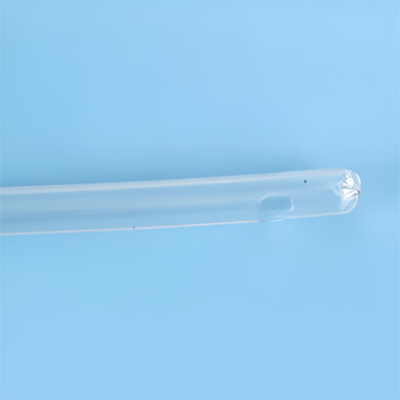
Extrusion forces melted plastic through a die. It produces miles of straight material. However, it cannot finish the job. The secondary operations handle discrete work. They execute high-precision finishing operations. They transform basic stock into functional clinical devices.
You have several ways to integrate this equipment into your facility. Plant layouts dictate the optimal approach. We often see two primary setups in modern manufacturing floors.
Standalone Semi-Automated Workstations: These serve low-volume or high-mix production. R&D labs rely on semi-automated models for prototyping. Operators manually load each individual part into the mold.
Fully Automated Assembly Lines: High-volume plants integrate forming into broader assembly systems. A single line handles automated urine bag tube cutting, forming, and insertion simultaneously. This eliminates manual handling entirely.
Different polymers melt at drastically different temperatures. Machines must control heat profiles precisely. A reliable Medical Tube Reforming Machine accommodates a variety of thermoplastics.
Polyurethane (TPU)
Polyvinyl Chloride (PVC)
PEBAX (Polyether block amide)
Nylon
PTFE (Polytetrafluoroethylene)
You must ensure your equipment prevents material degradation. Overheating causes yellowing and brittleness. Proper thermal control preserves the mechanical integrity of the polymer.
Buying the wrong machine leads to massive scrap rates. You must evaluate options based on concrete engineering criteria. Shiny brochures rarely reveal operational limitations.
Heating defines the entire forming process. Manufacturers generally use two distinct methods. Each offers specific advantages based on your product design.
Heating Technology | Mechanism | Best Applications | Key Advantage |
|---|---|---|---|
RF (Radio Frequency) | Electromagnetic induction heats a metallic mold. | Catheter tipping, complex multi-lumen bonding. | Highly localized heat. Minimizes thermal damage to surrounding material. |
Thermal / Hot Air | Direct radiant heat or hot air convection. | Flaring, simple necking, lower-precision bonds. | Cost-effective for straightforward operations. Easier maintenance. |
Assess the manufacturer’s ability to produce custom molds. They typically use glass, brass, or stainless steel. High-tolerance molds must account for specific polymer shrinkage rates. Glass molds allow UV curing if needed. They also offer excellent operator visibility. Brass heats quickly and maintains stable temperatures. Stainless steel offers incredible durability for high-volume runs.
Evaluate your target cycle times carefully. Does the process require manual loading of single tubes? Or does it utilize magazine loaders and automated ejection systems? Small shops survive on manual loading initially. High-throughput facilities demand robotic feeding mechanisms. Automated ejection prevents operator fatigue and ensures consistent handling.
Medical manufacturing requires stringent hygiene protocols. Machines must fit ISO Class 7 or 8 cleanroom environments. Look for heavy-duty stainless steel construction. Ensure the pneumatics operate particulate-free. Surfaces must remain easy to wipe down and sanitize daily. Avoid machines featuring exposed greasy rails or hard-to-reach crevices.
Procuring the machine represents just one phase. Integrating it smoothly introduces serious challenges. Many facilities struggle during the initial rollout. Anticipating these risks saves months of engineering frustration.
Buying the equipment is only step one. Regulatory bodies demand proof of consistency. You must pass Installation, Operational, and Performance Qualification (IQ/OQ/PQ). The equipment must allow strict control over operational parameters. It needs to log temperature, time, and pressure accurately. Without digital data logging, FDA compliance becomes a massive headache.
Common Mistake: Treating IQ/OQ/PQ validation as an afterthought.
Best Practice: Involve your quality assurance team during the initial vendor selection phase. Confirm software complies strictly with CFR 21 Part 11 requirements.
Changing product SKUs introduces a major hidden constraint. Assess how long operators need to swap molds. They must also recalibrate heating profiles manually. Lengthy changeovers destroy daily throughput. Standardized tool-less changeover systems solve this issue effectively. Seek out quick-release fixtures.
Less sophisticated machines suffer from temperature fluctuations. During long shifts, ambient conditions change constantly. Thermal drift leads to micro-defects or brittle tubing. Look for a Medical Tube Forming Machine utilizing closed-loop thermal feedback. Sensors monitor mold temperature actively. They adjust power delivery instantly to maintain perfect parameters.
Modern systems rely heavily on software controls. High-automation machines require less manual dexterity. However, they demand much higher technical literacy. Operators must manage HMI (Human-Machine Interface) recipes safely. They must understand fault codes and alarm triggers. Plan extensive training sessions before going live. Empower operators to troubleshoot minor issues independently.
A glossy brochure rarely tells the whole story. You need empirical evidence before signing a purchase order. Vet your vendor aggressively. Treat them as a long-term manufacturing partner rather than a simple supplier.
Never purchase equipment based on specifications alone. Require the vendor to run your specific polymer samples. They should use their tooling to process your raw material. This proves yield rates. It verifies expected cycle times accurately. It exposes hidden material incompatibilities early in the process.
Ensure your contract includes a rigorous FAT. The machine must run continuously under load. It should hit target yields before leaving the vendor's floor. You should witness this test personally. Identify software bugs or mechanical jams during this phase. Do not authorize shipment until the machine performs flawlessly.
Machines inevitably break down over time. Check the availability of replacement heating elements. Ensure they can supply custom molds quickly upon request. Verify they have technical support active in your local manufacturing region. Extended downtime destroys production schedules. Secure a strict Service Level Agreement (SLA) detailing maximum response times.
A Medical Tube Reforming Machine serves as a critical bottleneck point in medical device assembly. Its precision directly dictates the safety and clinical viability of the final product. Poorly formed tips harm patients. Weak bonds cause catastrophic fluid leaks. We recommend shifting your evaluation strategy immediately. Move away from baseline price comparisons. Focus heavily on thermal consistency and validation readiness. Prioritize machines featuring advanced data logging capabilities.
Take specific next steps today. Gather your target material specifications. Determine your required cycle times and pull your dimensional drawings. Request custom part-forming demonstrations from your shortlisted manufacturers. Seeing your actual product formed perfectly guarantees a successful capital investment. Proper diligence ensures seamless integration and reliable production for years to come.
A: Most machines process common thermoplastics effectively. These include Polyurethane, PVC, Polycarbonate, PEBAX, and FEP. Thermoset materials like silicone typically require different processing methods. However, specialized hybrid machines do exist for complex silicone applications.
A: RF (Radio Frequency) heating uses electromagnetic energy. It heats a metallic mold almost instantly, offering highly localized melting. Thermal forming uses direct radiant heat or hot air. It operates slower and spreads heat over a wider area.
A: It depends on your Quality Management System and part complexity. Full IQ/OQ/PQ validation usually takes 4 to 12 weeks. Equipment featuring advanced, CFR 21 Part 11 compliant data logging significantly accelerates this timeline.
A: Yes. Advanced systems manage complex multi-lumen profiles safely. They utilize specialized mandrels and wire pins. Operators insert these into the lumens during heating. This prevents internal channels from collapsing or warping.
