

close
Choose Your Site
Global
Social Media
Views: 0 Author: Site Editor Publish Time: 2026-06-25 Origin: Site


Nameplate capacity rarely equals actual production yield. Many buyers face a familiar dilemma during equipment acquisition. You read impressive maximum rated speeds on a brochure. Yet, real-world factory floors tell a much different story. We must define true efficiency in bag manufacturing accurately. Experts rely on Overall Equipment Effectiveness (OEE). OEE acts as a critical metric. It perfectly balances availability, performance, and quality.
High theoretical speeds mean nothing if scrap rates destroy your margins. This article serves as your objective evaluation guide. Operations and procurement teams will learn to identify hidden bottlenecks effectively. You will discover how to validate OEM claims before making commitments. We aim to help you calculate realistic ROI prior to investing in new equipment. By understanding these core variables, you can optimize your entire production ecosystem.
A High Speed Bag Making Machine only delivers high ROI if supported by rapid changeover features and stable web handling.
Material consistency and thermal sealing technology dictate scrap rates, which heavily skew actual efficiency.
Transitioning from legacy mechanical drives to fully servo-driven systems is the baseline for modern efficiency gains.
Real-world output depends as much on HMI usability and operator training as it does on hardware specifications.
Manufacturers often over-index on maximum cycles per minute (CPM). They frequently ignore micro-stops, maintenance downtime, and frustrating material jams. This creates a massive gap between expected output and actual throughput. A machine might boast a rating of 400 CPM. However, true production speed often hovers significantly lower. You must look beyond paper specifications to understand actual efficiency.
Availability constraints constantly threaten daily output. Time lost to manual threading severely impacts your production schedule. Tooling adjustments consume valuable hours during shift changes. Furthermore, warming up sealing bars delays immediate operational starts. These cumulative delays directly sabotage equipment availability. Every idle minute represents lost revenue for your facility.
Quality and yield losses present another major hurdle. High speeds mean absolutely nothing if seal integrity fails. Print registration drifts often occur during rapid continuous runs. These errors inevitably lead to disastrously high scrap ratios. High scrap effectively erases any benefit gained from running a fast Bag Making Machine.
You need a strict evaluation lens during procurement. Demand baseline OEE data from Original Equipment Manufacturers (OEMs). Require data for specific film thicknesses and exact bag formats. Do not accept theoretical maximums designed purely for marketing purposes. Authentic data allows you to forecast actual production yields accurately.
The transition from mechanical linkages to servo integration defines modern manufacturing. Independent servo drives handle drawing, sealing, and cutting processes independently. They drastically reduce mechanical wear across the entire system. Servos provide incredibly precise synchronization during high-velocity operations. Conversely, legacy mechanical systems suffer from progressive backlash over time. This mechanical wear leads directly to costly registration errors.
Tension control and web guiding require exceptional automation. Automated tension zones prevent film stretching or wrinkling entirely. Consistent tension remains critical when running a High Speed Bag Making Machine. Edge Position Control (EPC) systems provide continuous real-time corrections. They successfully minimize material drift during prolonged, continuous production runs.
Your shortlisting logic must include deep automation audits. You should carefully verify the Programmable Logic Controller (PLC) architecture. Open-source platforms like Siemens or Allen-Bradley offer ultimate flexibility. Proprietary systems pose significant long-term risks for your operation. Proprietary controllers often lock you into expensive, slow OEM service cycles.
Comparison Chart: Servo vs. Mechanical Drive Systems | ||
Feature | Fully Servo-Driven Systems | Legacy Mechanical Systems |
|---|---|---|
Synchronization | Independent, precise electronic synchronization. | Relies on physical gears, belts, and chains. |
Wear and Tear | Minimal physical contact reduces long-term wear. | High friction leads to progressive backlash. |
Registration Accuracy | Maintains micro-millimeter precision at high speeds. | Accuracy degrades as mechanical components age. |
Maintenance Burden | Requires software updates and occasional lubrication. | Requires frequent physical recalibration and parts replacement. |
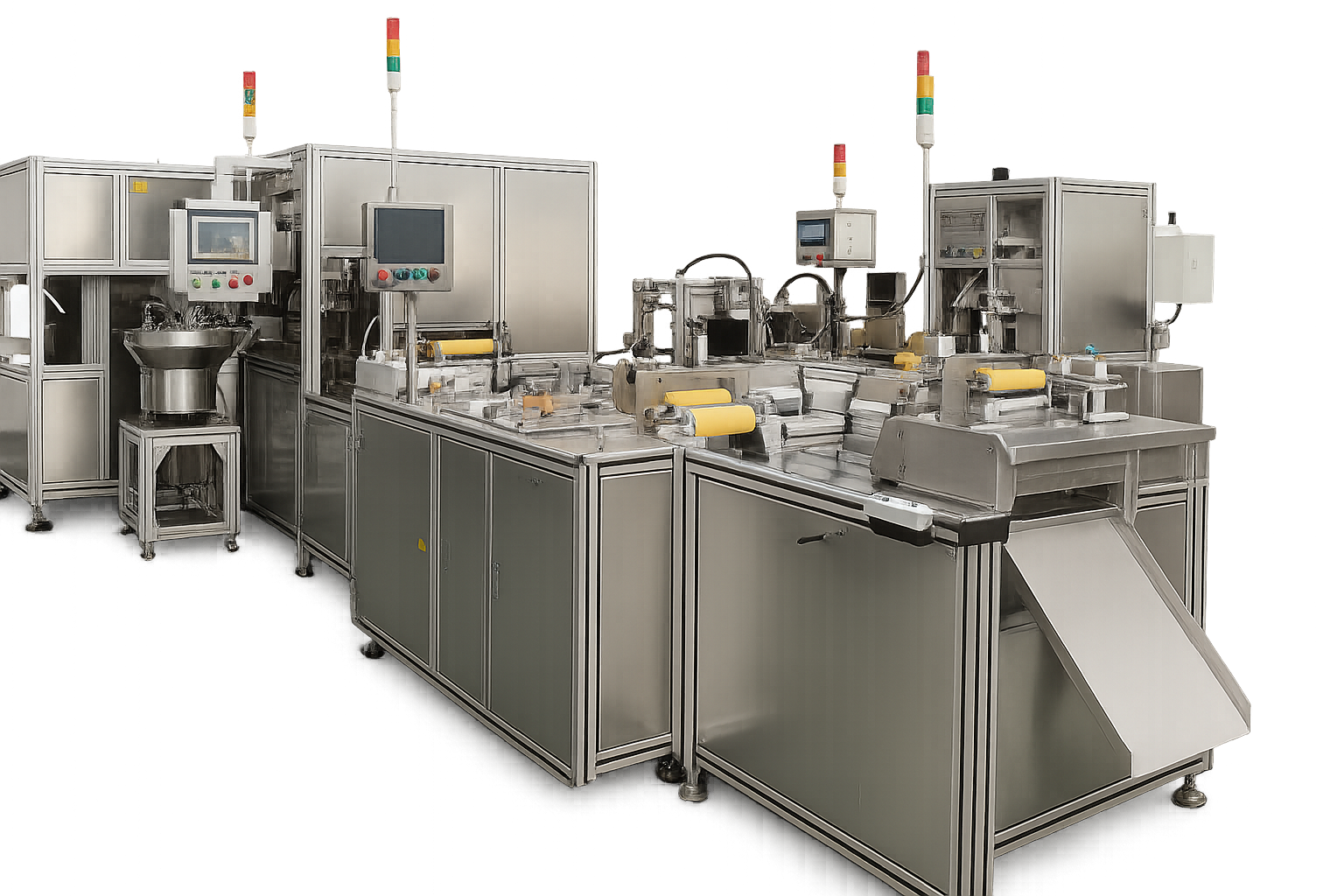
Material variables introduce massive complexities to production efficiency. Thinner films demand highly sensitive tension handling. Recycled content often contains microscopic impurities affecting heat distribution. Compostable bio-resins require fundamentally different handling than standard PE or PP. You cannot treat all substrates equally if you expect optimal efficiency.
Thermal fluctuation realities become glaringly obvious at high speeds. High-speed operations require instantaneous heat recovery in the sealing bars. Heat energy transfers rapidly from the bar into the moving film. If the heater cannot recover fast enough, seal quality drops immediately. You must establish strict thermal evaluation criteria before buying.
Look specifically for Proportional-Integral-Derivative (PID) temperature control modules. PID controllers calculate the precise energy needed to maintain exact temperatures. They successfully prevent temperature drops during continuous high-speed cycling. This technology eliminates cold seals and guarantees product safety.
Incompatible tooling introduces a massive downtime risk. The wrong tooling for specific materials causes catastrophic "burn-throughs". It can also result in dangerously weak seals failing under load. Ensure the machine under consideration has customizable sealing profiles. Easily swappable sealing profiles allow operators to adapt quickly to new materials.
Modern production floors face constant tension between high-mix and high-volume demands. High-volume runs hide setup inefficiencies effectively. However, in environments requiring frequent size or format changes, the narrative shifts. Setup time becomes the single biggest efficiency killer. Every minute spent adjusting parameters delays the next profitable batch.
Recipe management directly solves setup delays. Modern Human-Machine Interfaces (HMIs) act as the brain of your operation. A quality HMI should store hundreds of distinct production "recipes". These recipes securely hold parameters for tension, temperature, cut length, and speed. Digital recipe storage completely eliminates slow, trial-and-error setups.
Tool-less adjustments separate average machines from elite equipment. You must implement practical considerations during the procurement phase. Assess how long it takes an average operator to perform routine tasks. Time them changing a cutting blade. Measure how quickly they adjust the photocell for print registration.
Follow these success criteria for changeover workflows to maximize efficiency:
Digital Retrieval: The operator selects the pre-programmed recipe from the HMI screen immediately.
Automated Positioning: Servo motors automatically adjust sealing bars and tension zones to saved coordinates.
Tool-less Swaps: The operator replaces the cutting blade using quick-release levers instead of wrenches.
Web Alignment: The EPC system automatically aligns the new film roll without manual nudging.
Immediate Production: The machine reaches optimal sealing temperatures and operational speeds within minutes.
A target changeover time of under 15 minutes is vital for standard format shifts. Achieving this benchmark requires highly intuitive hardware and software design.
The true cost of unplanned downtime destroys profit margins rapidly. Consider two different operational scenarios. A machine running at 95% efficiency breaks down unexpectedly twice a month. Another machine runs steadily at 85% efficiency zero unplanned stops. The slower, reliable machine is far more profitable over a quarter. Consistency always outperforms erratic bursts of high speed.
Key wear components require constant vigilance. Teflon tape and fabric degradation on sealing bars cause sticking issues. Once Teflon degrades, film builds up and ruins subsequent seals. Flying knives and guillotine blades dull gradually over thousands of cuts. A dull blade creates jagged edges and increases machine strain.
You must perform an evidence-oriented feature check. Do not rely on vague promises regarding durability. Evaluate whether the machine features automated lubrication systems. Automated systems ensure critical bearings receive exact oil amounts on schedule. Software alerts for preventative maintenance are equally crucial. HMIs tracking blade cycles can warn operators before a dull blade ruins a batch.
Auditing current bottlenecks is the first critical step. You must understand your existing pain points before seeking new solutions. Is your current inefficiency driven by absolute machine speed limitations? Are changeover delays eating up your shift hours? Does scrap material account for your largest financial loss? You must buy equipment explicitly designed to solve your specific bottleneck.
Always ask for the Factory Acceptance Test (FAT). Never accept a "rated speed" metric printed on paper alone. Paper specifications reflect perfect conditions impossible to replicate in reality. Demand a comprehensive FAT before finalizing any purchase order. Require the manufacturer to conduct this test under strict conditions.
The FAT must utilize your actual production film. Bring the exact materials your factory uses daily. The test must also run your specific bag dimensions. If the OEM refuses to run your film, consider it a major warning sign. Only sign off on the equipment when the FAT proves real-world capabilities. Validating these metrics protects your capital and guarantees operational readiness.
Maximum efficiency requires an integrated ecosystem. Machine capability, material quality, and operational processes must align perfectly.
Evaluate holistically: Never buy equipment strictly based on initial price tags.
Look beyond speed: Isolated "top speed" metrics mean nothing without changeover agility.
Prioritize seals: Seal integrity remains the ultimate indicator of quality and yield.
Audit software capabilities: Ensure your PLC and HMI support rapid, tool-less transitions.
As a next-step action, we recommend auditing your current OEE immediately. Identify your primary operational bottlenecks using concrete data. Then, request an application-specific test run from your shortlisted manufacturers to ensure guaranteed performance.
A: No. If your operators struggle with complex changeovers or if your material quality is inconsistent, a higher-speed machine may simply produce scrap faster. Efficiency requires stable inputs and trained personnel.
A: Thicker films require longer dwell times for heat sealing, which naturally reduces the cycles per minute (CPM). Thinner films can run faster but are more susceptible to tension wrinkles and jams if the machine lacks advanced web control.
A: While it varies by labor costs and volume, integrating inline processes typically shows ROI within 12–18 months. Automated folders, sewing units, or auto-stacking systems achieve this by significantly reducing manual handling and eliminating downstream labor bottlenecks.
