

close
Choose Your Site
Global
Social Media
Views: 0 Author: Site Editor Publish Time: 2026-06-29 Origin: Site


In medical device manufacturing, equipment selection dictates clinical success. Minor deviations in tubing geometry routinely lead to catastrophic scrap rates. They can also trigger severe regulatory compliance failures. Operators cannot risk patient safety through inconsistent catheter profiles.
The industry has shifted significantly over the past decade. Manufacturers no longer rely on manual benchtop forming methods. Today, they demand highly calibrated, repeatable reforming systems. These automated platforms guarantee strict dimensional accuracy. They eliminate the variability introduced by manual human handling.
Selecting the right equipment requires looking far beyond basic specification sheets. You must critically evaluate material behavior under intense thermal stress. You should also assess tooling flexibility and overall workflow integration capabilities. Furthermore, rigorous quality validation protocols remain non-negotiable. This guide will walk you through these critical evaluation phases. Ultimately, you will learn how to choose the optimal Medical Tube Reforming Machine to elevate your manufacturing capabilities.
Define Material & Geometry First: Your choice of technology (RF vs. thermal) is dictated entirely by polymer type (e.g., PTFE, Pebax, Polyurethane) and the specific reforming action (tipping, flaring, flanging).
Prioritize Closed-Loop Control: Precision requires real-time monitoring of heat and pressure to maintain tight tolerances and ensure batch-to-batch consistency.
Assess Validation Readiness: A machine is only as good as its documentation; prioritize vendors offering comprehensive IQ/OQ/PQ support and 21 CFR Part 11 compliant software.
You must establish a concrete production baseline before evaluating hardware. Hardware performance heavily depends on the underlying material science. Different polymers react uniquely to thermal forming processes. You cannot treat all extrusions equally. Thermoplastics behave differently than fluoropolymers. Understanding these chemical realities prevents expensive processing errors.
Thermoplastics like Pebax or Nylon require highly specific thermal profiles. They melt and reflow predictably. However, they degrade quickly if exposed to excessive heat. Fluoropolymers like PTFE require much higher processing temperatures. PTFE resists conventional melting. It demands specialized heating parameters to achieve geometric stability. You must map these material behaviors early in your procurement process. Doing so ensures your chosen machine accommodates your specific resin blends.
Next, categorize your machine requirements based on the desired geometric output. Common end-forming types include catheter tipping, hole punching, flaring, necking, and bonding. Each geometry demands distinct tooling configurations. A flaring operation requires expanding mandrels. A tipping operation uses heated glass or metal dies to shape the distal end. You must define these outputs clearly.
Volume and scalability represent another crucial evaluation pillar. Establish strict criteria for your daily production volume. You must choose between single-station units and multi-station systems. Single-station prototyping units work perfectly for R&D labs. They offer maximum flexibility for short runs. However, they fail to meet high-volume manufacturing demands. Multi-station systems serve commercial production better. They optimize throughput through parallel processing.
Follow this numbered evaluation sequence to map your baseline accurately:
Audit Material Specifications: Document the exact polymer blends, durometers, and melting points for every tube you process.
Define Geometric Tolerances: Specify the exact dimensional limits required for every finished tip, flare, or flange.
Calculate Throughput Needs: Determine the exact parts-per-hour (PPH) required to meet current and future production targets.
Assess Floor Space: Measure the physical cleanroom footprint available for the new equipment installation.
Identify Secondary Operations: Note any secondary processing steps required immediately after the reforming phase.
The heating mechanism serves as the heart of any forming equipment. Two primary technologies dominate the industry. You will encounter Radio Frequency (RF) forming and Thermal Convection forming. Each method offers distinct advantages. Each method also presents specific limitations. You must match the heating technology directly to your polymer type.
Radio Frequency (RF) forming provides fast, highly localized heating. It excites the molecules within the polymer directly. This molecular friction generates immediate internal heat. RF technology excels at complex catheter tipping. It also performs exceptionally well when bonding dissimilar materials together. The heat concentrates strictly on the target zone. This localized focus protects the rest of the tube shaft from thermal degradation.
However, RF forming possesses notable limitations. It requires specific dielectric properties within the material. It does not suit all polymer types effectively. RF systems also require highly specialized tooling. Operators usually utilize custom brass or copper molds. These conductive molds capture and direct the RF energy. Procuring these custom dies requires additional engineering lead time.
Thermal Convection forming offers a highly stable alternative. These systems utilize heated air or direct contact conduction. Thermal forming delivers incredibly uniform heating profiles. It works flawlessly for flaring and flanging operations. Convection forming accommodates a much broader material set than RF systems. It processes almost any thermoplastic effectively. You rely on precise PID temperature controllers to maintain optimal heat levels.
Thermal forming does present its own unique challenges. It generally yields slower cycle times compared to rapid RF heating. Ambient heat transfer poses significant risks. The radiant heat can easily affect adjacent tube sections. You must implement proper thermal shielding. Adequate cooling nozzles must quickly solidify the polymer after shaping.
Review the comparison chart below to guide your technology selection:
Evaluation Criteria | Radio Frequency (RF) Forming | Thermal / Convection Forming |
|---|---|---|
Heating Speed | Extremely fast; rapid cycle times. | Moderate to slow; requires ramp-up time. |
Material Compatibility | Limited; requires specific dielectric properties. | Broad; handles most thermoplastics easily. |
Best Applications | Catheter tipping, bonding dissimilar tubes. | Flaring, flanging, necking operations. |
Tooling Requirements | Custom brass/copper conductive dies. | Standard thermal molds; heated mandrels. |
Thermal Risk | Low ambient spread; highly localized. | Higher ambient spread; requires shielding. |
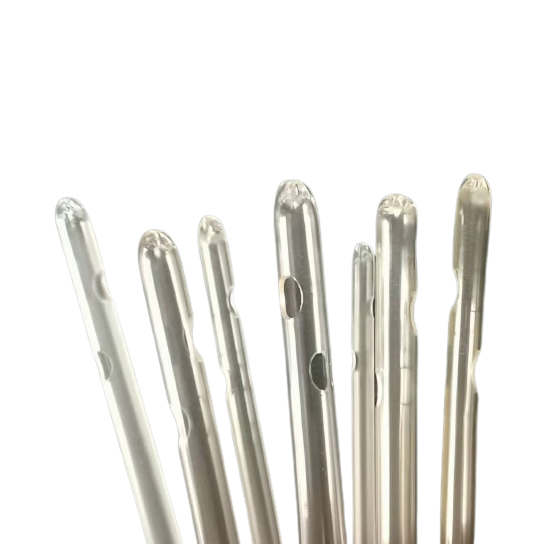
Precision represents the ultimate goal in catheter manufacturing. You achieve this precision through intelligent hardware design. Closed-loop feedback systems serve as mandatory requirements. Real-time sensor integration remains essential for consistent quality. Advanced machines incorporate sensitive thermocouples and precision pressure transducers.
These integrated sensors monitor the forming environment continuously. They auto-adjust parameters dynamically during the cycle. If a thermocouple detects a sudden temperature drop, the system compensates instantly. It applies targeted heat to maintain the setpoint. This dynamic adjustment prevents catastrophic material degradation. It ensures repeatable quality across thousands of cycles.
Tooling modularity drastically impacts your daily operational efficiency. Operators must swap molds or dies rapidly between batches. Lengthy changeovers destroy production schedules. You should apply SMED (Single-Minute Exchange of Die) principles during your vendor evaluation. Evaluate how the machine facilitates quick transitions.
Look for equipment featuring quick-release pneumatic clamps. Magnetic mold bases also accelerate the changeover process. Avoid machines requiring complex hand-tool calibrations for every new batch. The best platforms allow operators to switch forming profiles digitally. They recall saved recipes instantly while the physical tooling snaps firmly into place.
Integration capabilities define the machine's true utility. You must assess upstream and downstream connectivity thoroughly. Determine how the unit integrates into a broader automated environment. A standalone unit often creates unexpected workflow bottlenecks. It forces operators to manually transport batches across the cleanroom.
Evaluate how smoothly the reforming equipment communicates with a larger Medical Tube Processing Machine. Can it accept signals from automated tube cutters? Does it feed finished parts directly into inspection vision systems? Modern manufacturing demands seamless digital and physical handoffs. Secure these integration protocols early in the design phase.
Medical manufacturing operates under extreme regulatory scrutiny. Your equipment must meet strict environmental and software standards. Environmental suitability establishes the baseline for regulatory approval. You must verify ISO Class 7 or 8 cleanroom compatibility immediately. A standard industrial machine will contaminate your controlled environment rapidly.
Cleanroom-ready equipment features specific design modifications. It utilizes fully enclosed pneumatics to prevent exhaust contamination. Medical-grade stainless steel surfaces remain non-negotiable for proper sanitization. Particulate mitigation systems are absolutely crucial. Look for internal HEPA filtration and sealed linear actuators. These components prevent mechanical wear particles from reaching the sterile product zone.
Data logging and traceability define modern quality assurance. Software compliance stands as an absolute necessity. You cannot rely on paper batch records for complex automated processes. Look for automated data collection features. The system must record temperature, pressure, and dwell time for every single cycle.
Demand unalterable digital audit trails from the equipment vendor. FDA 21 CFR Part 11 compliance is mandatory for managing electronic records. The software must require secure, role-based login credentials. It must track exactly who changed a recipe and when they changed it. This digital transparency protects your facility during regulatory audits.
Vendor validation support dictates your actual time-to-market. A machine represents only half of the purchase. The accompanying documentation represents the other half. Assess the manufacturer's readiness to support your compliance journey. They must provide robust factory acceptance testing (FAT) before shipping.
Use the following checklist to evaluate a vendor's validation readiness:
Detailed IQ (Installation Qualification): Verifies utility connections, physical dimensions, and electrical safety standards.
Comprehensive OQ (Operational Qualification): Tests the machine's operational limits, alarms, and emergency stop functions.
Robust PQ (Performance Qualification): Proves the machine produces acceptable parts consistently under normal production loads.
Traceability Matrix: Maps specific machine functions directly back to user requirement specifications (URS).
Calibration Certificates: Includes NIST-traceable certificates for all internal sensors and gauges.
Choosing the correct equipment balances thermal precision, material science, and strict regulatory compliance. You cannot prioritize one factor over the others. Understanding your polymer's behavior remains the foundation of a successful deployment. Matching that behavior to the correct RF or thermal heating technology prevents chronic manufacturing defects.
Start the procurement process intelligently. Shortlist your vendors based on their validation support and cleanroom readiness. Submit your actual polymer sample materials to these shortlisted vendors. Demand a thorough proof-of-concept run. This physical demonstration proves their technical claims. It removes the guesswork from the engineering phase.
Take proactive steps today to secure your manufacturing future. Download a comprehensive machine evaluation checklist to standardize your vendor reviews. Request a sample processing run using your most challenging extrusion. Schedule a direct technical consultation with an expert application engineer. These actions ensure you select equipment capable of passing strict clinical audits while maximizing daily throughput.
A: An extrusion machine melts raw polymer pellets and pushes them through a die to create a continuous tube. A reforming machine shapes the ends or specific sections of that pre-cut tube. Extrusion builds the raw structure. Reforming adds critical geometric features like flares or tips.
A: Realistic timelines range from several weeks to a few months. The timeline depends heavily on the vendor. Excellent pre-supplied IQ/OQ documentation accelerates the process significantly. The complexity of your facility's internal Quality Management System (QMS) also heavily influences the final validation schedule.
A: Yes, operators can achieve this if the machine features modular tooling and programmable thermal profiles. However, dedicated machines are often preferred for high-volume lines. Assigning one machine per task reduces frequent tool changes. This strategy eliminates changeover friction and maximizes daily output.
